
FED Does Not Decide Stock Prices

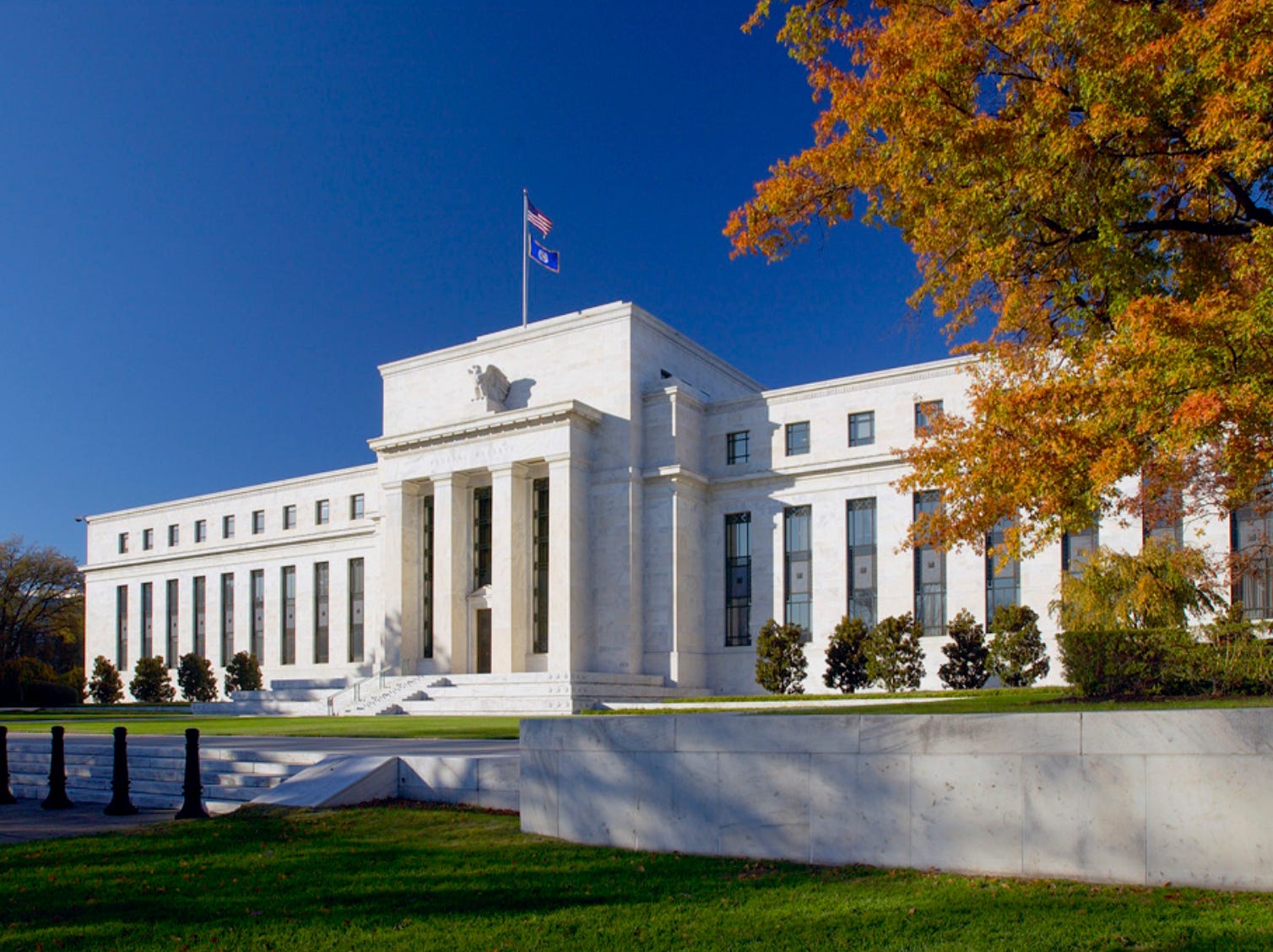
FED Decides Interest Rates — Which Is the Price of Money
When people talk about financial markets, few institutions are mentioned more often than the FED.
Every time the FED raises or cuts interest rates,
stocks, bonds, gold, crypto, and currencies around the world react almost immediately.
But what exactly is the FED?
And why does a central bank in the United States influence nearly every major financial market on Earth?
1) What is the FED?
The FED (Federal Reserve System) is the central bank of the United States.
It was created in 1913 after a series of banking crises in the early 20th century.
The main goal behind the creation of the FED was simple:
to build a more stable financial system
and reduce the risk of widespread banking panics.
Before the FED existed,
the American financial system was far more chaotic:
Banks failed frequently
Liquidity shortages were common
Bank runs happened regularly
And there was no true “lender of last resort”
The Panic of 1907 became the turning point that convinced the United States it needed a real central banking system.
And from that crisis,
the FED was born.
2) What does the FED actually do?
Many people think the FED only “raises or cuts interest rates.”
In reality, its role is much broader.
The FED has three major responsibilities:
• Maintaining price stability (controlling inflation)
The FED tries to keep inflation at manageable levels so that:
Money does not lose value too quickly
The economy can grow more sustainably
• Supporting employment and economic growth
The FED does not want:
Unemployment to become excessively high
Recessions to become prolonged depressions
That is why during crises,
the FED often:
Cuts interest rates
Injects liquidity
Supports the financial system
• Stabilizing the banking system
The FED acts as:
the lender of last resort.
When panic spreads through the financial system,
the FED can provide liquidity to prevent broader collapse.
3) Why does the FED influence the entire world?
This is the most important part.
The FED is America’s central bank.
But the US dollar is also the world’s reserve currency.
That means:
Global trade heavily uses USD
Global debt heavily depends on USD
Commodities and financial assets are largely priced in USD
When the FED changes interest rates,
the cost of using dollars changes globally as well.
For example:
When the FED raises rates:
The US dollar usually strengthens
Capital tends to flow back into the US
Emerging markets face pressure
Risk assets often weaken
When the FED cuts rates:
Money becomes cheaper
Liquidity increases
Investors seek more risk
Financial assets often rise
That is why the entire world watches every FED meeting closely.

4) The FED does not simply “print money” freely
This is one of the most common misunderstandings.
The FED does not directly hand out free money.
Instead, it mainly influences the system through:
Interest rates
Government bond operations
Banking system liquidity
And market expectations
But because the US dollar sits at the center of the global financial system,
every FED decision has enormous consequences.
5) Why markets fear the FED
Modern financial markets depend heavily on liquidity.
When the FED keeps interest rates low:
Borrowing becomes cheaper
Companies can expand more easily
Stock valuations rise
Risk-taking increases
But when the FED tightens policy:
Capital becomes more expensive
Liquidity shrinks
Valuations compress
Pressure spreads across the system
In simple terms:
The FED does not directly control stock prices.
The FED controls interest rates — which is the price of money.
And the price of money influences nearly every financial asset.
6) An interesting paradox about the FED
The FED is often criticized from both sides.
When it supports markets too aggressively:
→ people accuse it of creating asset bubbles.
When it raises rates too aggressively:
→ people accuse it of damaging the economy.
This happens because the FED constantly tries to balance:
Economic growth
Inflation
Unemployment
And financial stability
And that balance is almost never perfect.
Conclusion
The FED is not just an American financial institution.
It is one of the central pillars of the modern global liquidity system.
Understanding the FED is not about predicting tomorrow’s market perfectly.
It is about understanding:
Why capital moves
Why assets rise and fall
And why liquidity is often the hidden force behind every major financial cycle.

— Vietnamese —
FED không quyết định giá cổ phiếu. FED quyết định lãi suất - tức giá của tiền.
Vì sao gần như mọi thị trường tài chính trên thế giới đều theo dõi FED?
Khi nói về kinh tế toàn cầu, có lẽ không tổ chức nào được nhắc đến nhiều hơn FED.
Mỗi lần FED tăng hay giảm lãi suất, thị trường chứng khoán, vàng, trái phiếu, crypto và cả tỷ giá trên toàn thế giới đều phản ứng rất mạnh.
Nhưng thực chất FED là gì?
Vì sao một tổ chức của Mỹ lại có ảnh hưởng lớn đến gần như toàn bộ hệ thống tài chính toàn cầu?
1) FED là gì?
FED (Federal Reserve System) là ngân hàng trung ương của Mỹ.
Được thành lập năm 1913 sau hàng loạt cuộc khủng hoảng ngân hàng ở Mỹ đầu thế kỷ 20.
Mục tiêu lớn nhất khi tạo ra FED là:
Tạo ra một hệ thống tài chính ổn định hơn và giảm nguy cơ khủng hoảng ngân hàng lan rộng.
Trước khi FED tồn tại, hệ thống tài chính Mỹ khá hỗn loạn:
Ngân hàng dễ sụp đổ
Thiếu thanh khoản
Panic bank run xảy ra thường xuyên
Không có “người cứu trợ cuối cùng”
Khủng hoảng năm 1907 là cú sốc lớn khiến Mỹ quyết định cần một ngân hàng trung ương thực sự.
Và FED ra đời từ đó.
2) FED thực sự làm gì?
Nhiều người nghĩ FED chỉ “tăng giảm lãi suất”.
Nhưng thực tế vai trò của FED rộng hơn rất nhiều.
FED có 3 nhiệm vụ cốt lõi:
• Giữ ổn định giá cả (kiểm soát lạm phát)
FED cố giữ lạm phát ở mức hợp lý để:
Tiền không mất giá quá nhanh
Nền kinh tế vẫn tăng trưởng ổn định
• Hỗ trợ việc làm và tăng trưởng kinh tế
FED không muốn:
Thất nghiệp quá cao
Kinh tế suy thoái kéo dài
Vì vậy trong khủng hoảng,
FED thường:
Giảm lãi suất
Bơm thanh khoản
Hỗ trợ hệ thống tài chính
• Giữ ổn định hệ thống ngân hàng
FED đóng vai trò:
“lender of last resort”
(người cho vay cuối cùng)
Khi hệ thống tài chính gặp panic, FED có thể bơm tiền để ngăn khủng hoảng lan rộng.
3) Vì sao FED ảnh hưởng cả thế giới?
Đây là phần quan trọng nhất.
FED là ngân hàng trung ương của Mỹ.
Nhưng USD lại là đồng tiền dự trữ toàn cầu.
Điều đó có nghĩa:
Thương mại quốc tế dùng USD rất nhiều
Nợ toàn cầu dùng USD rất lớn
Dầu, hàng hóa, tài sản tài chính… đều định giá bằng USD
Khi FED thay đổi lãi suất,
chi phí sử dụng USD trên toàn thế giới cũng thay đổi theo.
Ví dụ:
Khi FED tăng lãi suất:
USD mạnh lên
Dòng tiền quay về Mỹ
Thị trường mới nổi chịu áp lực
Chứng khoán và tài sản rủi ro dễ giảm
Khi FED giảm lãi suất:
Tiền rẻ hơn
Thanh khoản tăng
Dòng tiền tìm kiếm rủi ro
Chứng khoán và tài sản tài chính thường hưởng lợi
Đó là lý do:
cả thế giới đều theo dõi từng cuộc họp FED.

4) FED không “in tiền tùy ý” như nhiều người nghĩ
Đây là hiểu lầm rất phổ biến.
FED không trực tiếp “phát tiền miễn phí”.
FED chủ yếu tác động thông qua:
Lãi suất
Trái phiếu chính phủ
Thanh khoản hệ thống ngân hàng
Kỳ vọng thị trường
Nhưng vì USD là trung tâm của hệ thống tài chính toàn cầu, mọi hành động của FED đều có hiệu ứng rất lớn.
5) Vì sao thị trường sợ FED?
Thị trường tài chính hiện đại phụ thuộc rất mạnh vào thanh khoản.
Khi FED giữ lãi suất thấp:
Tiền rẻ
Doanh nghiệp vay dễ hơn
Định giá cổ phiếu cao hơn
Tài sản rủi ro tăng mạnh
Nhưng khi FED thắt chặt:
Chi phí vốn tăng
Thanh khoản giảm
Định giá bị nén xuống
Áp lực xuất hiện trên toàn hệ thống
Nói đơn giản:
FED không trực tiếp điều khiển thị trường.
Nhưng FED ảnh hưởng đến “lãi suất - tức giá của tiền.”.
Và “lãi suất”
ảnh hưởng gần như mọi tài sản tài chính.
6) Một điều thú vị về FED
FED thường bị chỉ trích từ cả hai phía.
Khi cứu thị trường quá mạnh:
→ bị cho là tạo bong bóng tài sản.
Khi tăng lãi suất quá mạnh:
→ bị cho là bóp nghẹt kinh tế.
Điều này xảy ra vì:
FED luôn phải cân bằng giữa:
Tăng trưởng
Lạm phát
Thất nghiệp
Và ổn định tài chính
Đó là một bài toán gần như không bao giờ hoàn hảo.
Kết
FED không chỉ là một tổ chức tài chính của Mỹ.
FED là trung tâm của hệ thống thanh khoản toàn cầu hiện đại.
Hiểu FED không phải để dự đoán chính xác thị trường ngày mai.
Mà để hiểu:
Vì sao dòng tiền di chuyển
Vì sao tài sản tăng giảm
Và vì sao thanh khoản gần như luôn là “nhân vật chính” trong mọi chu kỳ tài chính.
Macro View Journal
Markets change every day.
But the principles behind them change much more slowly.
Understanding those principles is what really matters.
If you found this useful, feel free to share or subscribe.
Nếu bạn thấy bài viết hữu ích, hãy chia sẻ hoặc đăng ký theo dõi để nhận bài mới.
Read More

